The 40-yard roll-off measures roughly 22 feet long, 8 feet wide, and 8 feet tall, giving about 40 cubic yards of volume, the equivalent of around 16 pickup-truck loads. That footprint makes it the right call when a…
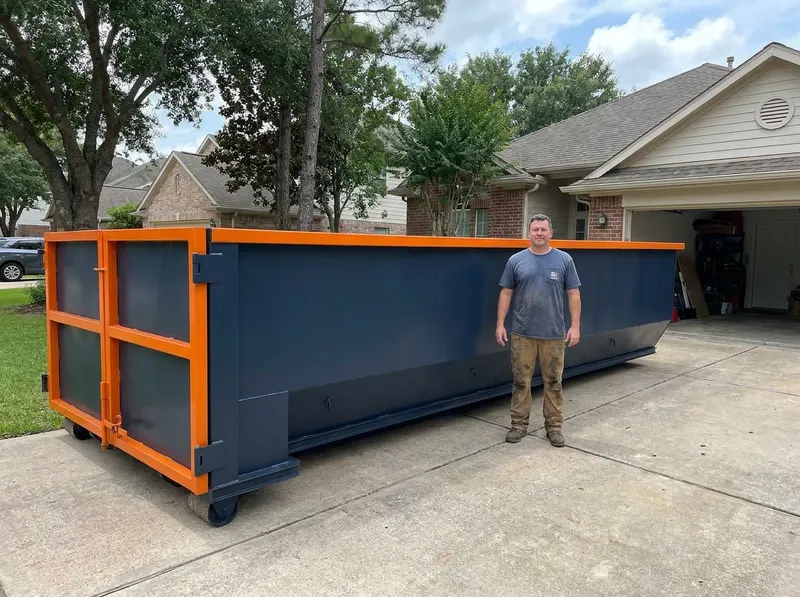
The 40-yard roll-off measures roughly 22 feet long, 8 feet wide, and 8 feet tall, giving about 40 cubic yards of volume, the equivalent of around 16 pickup-truck loads. That footprint makes it the right call when a 30-yard would fill before the job is done. Step 1, a customer calls or texts a photo of the project; Step 2, the size and a firm $895 price are confirmed; Step 3, the container is delivered and positioned; Step 4, the customer loads at their own pace over the rental period; Step 5, Big Rig Dumpster Rental hauls it to a licensed facility for disposal. A dumpster rental is self-service, you load it, which is different from full-service junk removal where a crew carries items out.
The 40-yard fits large-volume, lighter-density debris best: a full-house remodel in The Heights or Garden Oaks, a multi-room renovation in Oak Forest, a commercial office cleanout near the Galleria, or a large roof tear-off in Spring Branch. The trade-off is weight versus volume. Dense material like concrete, dirt, brick, or asphalt shingles is heavy, so a smaller 10-yard or 20-yard is often the smarter container for pure demolition rubble, while the 40-yard shines on bulky mixed debris. If the debris is bulky but light, framing lumber, cabinets, drywall, carpet, and packaging, the 40-yard clears the whole job in one haul. If the pile is mostly heavy concrete or soil, a 10-yard at $595 keeps the load within safe transport weight.
Container placement matters on tight Houston lots. A 40-yard needs about 60 feet of straight clearance to drop and lift cleanly, plus overhead room free of low power lines and tree limbs, a real consideration on the narrow streets and mature oaks of Montrose and River Oaks. On a standard driveway the container will take most of the width, so flatter commercial lots, wide driveways in Memorial and Kingwood, or open job sites suit it best. Placing a roll-off on a public street in Houston can require a permit from the City of Houston, and the Texas Commission on Environmental Quality (TCEQ) governs where construction and demolition debris is disposed. Household hazardous waste, paint, solvents, batteries, electronics, cannot go in the container; the EPA guidance on household hazardous waste and the City's drop-off sites cover those items, and tools like Earth911 help locate recycling for appliances and tires. Clean concrete and asphalt are often better routed to a construction and demolition recycling facility, and jobsite loading follows OSHA construction safety practices to avoid overloading. For scrap metal and appliances, the recycling industry association's locators and the ENERGY STAR appliance recycling's notes explain refrigerant handling. Tire disposal rules and landfill diversion are outlined by state solid-waste programs under RCRA solid waste rules, and general waste-reduction planning references the home builders association's jobsite recycling material. Keep the load level with the top rail, overfilled containers above the walls cannot be legally or safely transported on Houston roads.
Every job gets a firm, written price after an on-site visit.
Tell us about your 40-yard dumpster rental job in Houston and we'll send a clear, written quote, usually the same day.
 Big Rig Dumpster Rental