The 30-yard container is the standard choice for whole-house renovations, roof tear-offs, and large cleanouts where a smaller box would need two or three swaps. It sits between the 20-yard ($695) and the 40-yard ($895)…
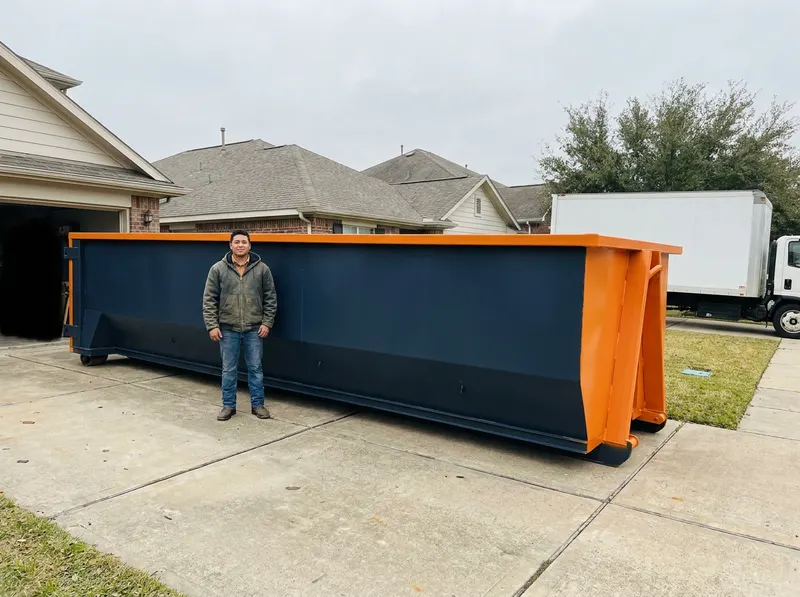
The 30-yard container is the standard choice for whole-house renovations, roof tear-offs, and large cleanouts where a smaller box would need two or three swaps. It sits between the 20-yard ($695) and the 40-yard ($895) in the lineup, and the 6-foot wall height keeps the top edge low enough to toss bulky items over by hand rather than hauling everything up a ramp. Decision-fit comes down to volume and footprint: a 10-yard ($595) fits a single bathroom remodel, a 20-yard suits a kitchen gut or a two-room cleanout, and the 30-yard handles a full roof tear-off on a 2,000, 2,500 sq ft home or a multi-room renovation; step up to the 40-yard only when bulky, lightweight debris like siding, cabinets, or whole-structure demolition fills space faster than it adds weight. The trade-off on a 30-yard is driveway space, the 22-foot length needs a clear, flat run, so measure the pad before the truck arrives.
In The Heights and Garden Oaks, where 1920s bungalows sit on narrow lots and alleys are tight, the 22-foot box usually lands in the driveway rather than the street. River Oaks and Memorial driveways typically have the depth for a full 30-yard without blocking the garage. For Montrose and Oak Forest teardown-and-rebuild projects, the 30-yard is the common pick for shingle, lath, and plaster debris. Spring Branch, Sharpstown, Kingwood, and Clear Lake jobs that run long benefit from the capacity, since fewer swap-outs mean the project keeps moving. Houston's clay soil holds water after a storm, so a plywood sheet under the wheels on a soft lawn prevents ruts, the container runs about 9,000, 11,000 lbs loaded.
A dumpster rental is not junk removal: the container is dropped at the site and the customer or crew loads it, which is why the flat rate stays low. Roofing shingles are heavy, a single square of asphalt shingles weighs about 250 lbs, per standard NRCA roofing references, so a 30-yard full of tear-off can approach its weight allowance even when it looks half full. Keep household hazardous waste out of the box: paint, solvents, oils, and batteries go to a Harris County drop-off, not the dumpster. Tires, appliances with refrigerant, and wet concrete also stay out; free electronics recycling locations can be found through Earth911. Construction and demolition debris is tracked under the EPA C&D materials program, and jobsite loading should follow OSHA 1926 construction standards for safe stacking and overhead clearance.
How it works is short. Step 1: call (281) 664-2240 with the delivery address and the date you need the box. Step 2: confirm the drop spot, driveway, lot, or street, and clear overhead wires and low branches. Step 3: the 30-yard is delivered, often same-day, and sits level on the chosen pad. Step 4: load the debris, keeping the top rail as the fill line so the load can be tarped. Step 5: call for pickup and the full container is hauled off at no extra charge beyond the $795. If the drop is on a public street, a right-of-way permit may be required through the City of Houston Permitting Center; driveway and private-lot placements do not need one.
Every job gets a firm, written price after an on-site visit.
Tell us about your 30-yard dumpster rental job in Houston and we'll send a clear, written quote, usually the same day.
 Big Rig Dumpster Rental